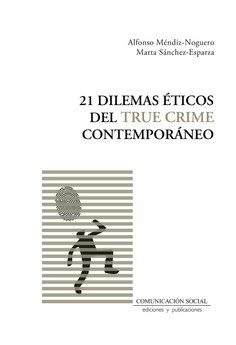
21 Ethical Dilemmas of Contemporary True Crime. Review
Article Sidebar
Main Article Content
Abstract
This review examines the monograph 21 Ethical Dilemmas of Contemporary True Crime, by Alfonso Méndiz-Noguero and Marta Sánchez-Esparza, a work focused on the main deontological conflicts associated with the production, dissemination, and reception of true crime. The book addresses, from an interdisciplinary perspective, issues such as sensationalism, revictimization, the presumption of innocence, privacy, the commercial exploitation of suffering, the glorification of criminals, stereotypes, conspiracy theories, and the gamification of crime. It structures these problems around three main tensions: public interest versus sensationalism, the right to information versus dignity, and narrative transparency versus harm minimization. The authors also propose principles related to truthfulness, proportionality, respect for the presumption of innocence, privacy, informed consent, and media literacy. The review highlights the book’s value as an applied framework for researchers, lecturers, communication professionals, content creators, and students interested in the ethics of contemporary true crime.
Downloads
Article Details

This work is licensed under a Creative Commons Attribution-NonCommercial 4.0 International License.
- Share — copy and redistribute the material in any medium or format
- Adapt — remix, transform, and build upon the material
Under the following terms:
-
Attribution — You must give appropriate credit, provide a link to the license, and indicate if changes were made. You may do so in any reasonable manner, but not in any way that suggests the licensor endorses you or your use.
-
NonCommercial — You may not use the material for commercial purposes.